Flat Warts: Easy to Miss, Easy to Spread
Flat warts (verruca plana) are a common viral skin condition caused by the Human papillomavirus, most often linked to types 3 and 10.
They appear as small, flat, skin - colored to light brown bumps — often mistaken for freckles or sunspots. Because of their subtle appearance, they are frequently overlooked or misdiagnosed.
Flat warts are mildly contagious and can spread through direct contact or across one’s own skin. Friction, scratching, shaving, or makeup application can gradually increase their number and distribution. They are most commonly seen on exposed areas such as the face, hands, and forearms.
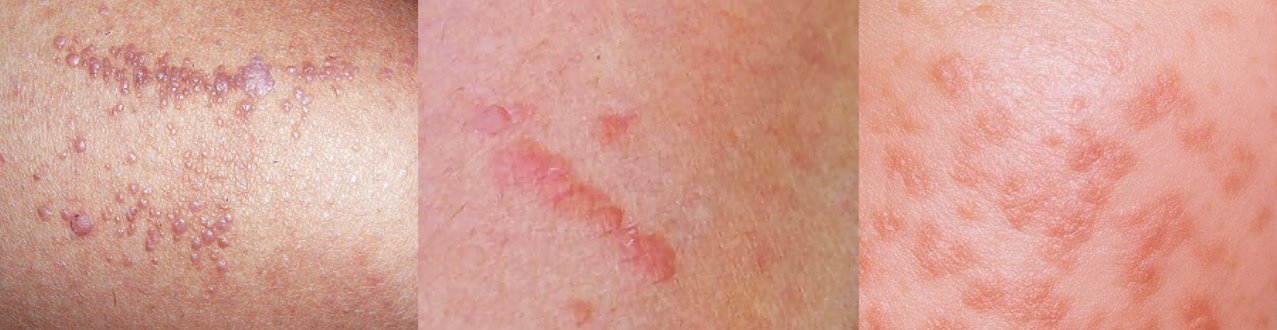
Appearance & Common Locations Typical features
- Small, flat, slightly raised bumps
- Skin-colored to light brown
- Smooth on the surface but slightly rough to the touch
- Often appear in clusters
Common locations
- Face (forehead, cheeks, chin)
- Neck
- Backs of the hands and forearms
- Beard area in men
Flat warts may align along scratch marks or areas of friction — this is known as the Koebner phenomenon.
Who Is More Likely to Get Them?
Flat warts are caused by HPV, but not everyone develops them. In clinical practice, they are more commonly seen in:
Active individuals
- Friction from wiping sweat
- Shared towels or equipment
Increases exposure and spread
Regular makeup users
- Brushes or sponges not cleaned regularly
- Repeated application over the same area
Can spread the virus across the face
Frequent skin touching or picking
- Popping acne, scratching
- Micro-cuts from shaving
The virus can spread through these small breaks
Periods of stress or reduced immunity
- Poor sleep, disrupted routines
- Chronic stress affecting immune balance
Reduced immune control allows the virus to become more active
Why Do Flat Warts Spread So Easily?
A key feature of flat warts is autoinoculation — meaning the virus can spread from one area to another on your own skin.
Once present, the virus can extend beyond the original site through everyday skin contact.
What this looks like in real life:
- Starts as a few isolated spots
- Gradually increases over weeks
- May form clusters
- Or line up along scratch marks
What Happens If Left Untreated?
- May persist for months to years
- Gradually increase in number
- Spread to larger areas (especially the face)
- Can be transmitted to close contacts
The main concern is not severity, but progression — more lesions often mean more complex management and greater cosmetic impact.
Treatment Options
Common approaches include:
Post-treatment care for CO2 laser Click here to find out more
- Topical treatments — including retinoids and immunomodulators (e.g. imiquimod)
- Cryotherapy (liquid nitrogen)
- Laser or other localized procedures
Treatment should be individualized based on lesion location, number, skin condition, age, and tolerance for downtime.
In practice, facial lesions are usually managed with gentler, more controlled approaches to reduce irritation and the risk of pigmentation.
This is why early treatment — when lesions are still limited — tends to be easier to manage, with more predictable outcomes.
Flat warts are not just "small bumps," but a viral condition that can be amplified by daily habits. When the number increases or starts to spread, a proper dermatological assessment is recommended.
References:
- DermNet
