Syphilis I: The Great Imitator
Syphilis remains an important public health concern. In the EU / EEA, reported rates more than doubled between 2015 and 2024. In Shanghai, 6,480 cases were reported in the first half of 2026, up about 18%
year on year. (ECDC Syphilis Annual Epidemiological Report 2024)
Syphilis, caused by Treponema pallidum, is known as "The Great Imitator" because it can resemble many other skin conditions. For dermatologists, the first clue may simply be an otherwise ordinary-looking rash.4 Key
Primary Syphilis An Easily Missed Painless Ulcer
Primary syphilis typically presents with a chancre at the site of infection, commonly on the genitals, around the anus, or in the mouth. The ulcer is usually painless and heals within a few weeks, but the infection remains.
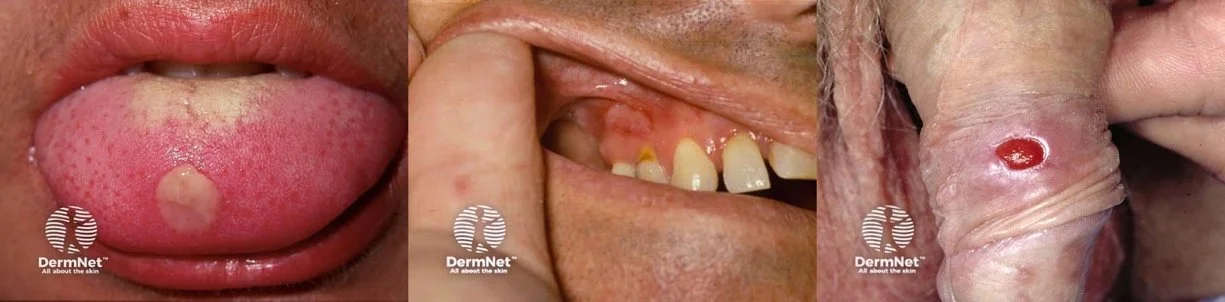
/ Image source: DermNet
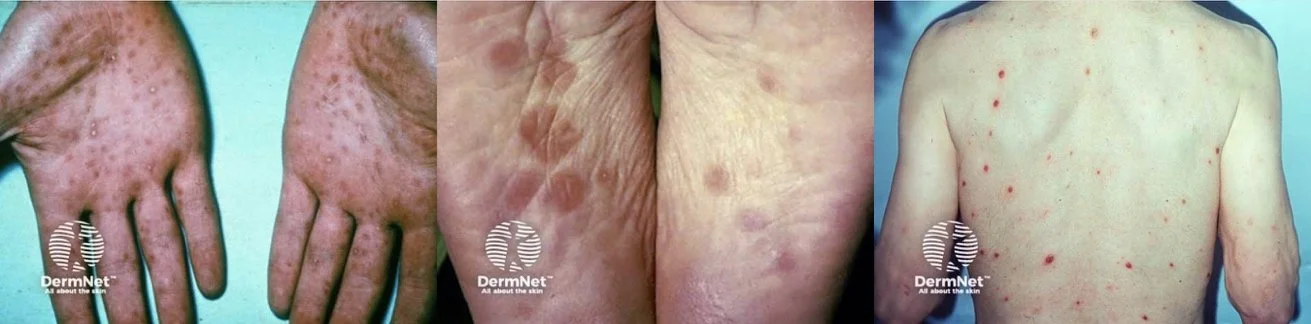
Secondary Syphilis A Rash With Many Faces
Secondary syphilis can cause a widespread rash, sometimes accompanied by oral lesions, swollen lymph nodes, or hair loss.
Involvement of the palms and soles is an important clue. The rash can resemble pityriasis rosea, psoriasis, or a drug eruption — one reason syphilis is known as " The Great Imitator."
Sudden rash alert: Could it be pityriasis rosea? Click here to find out more
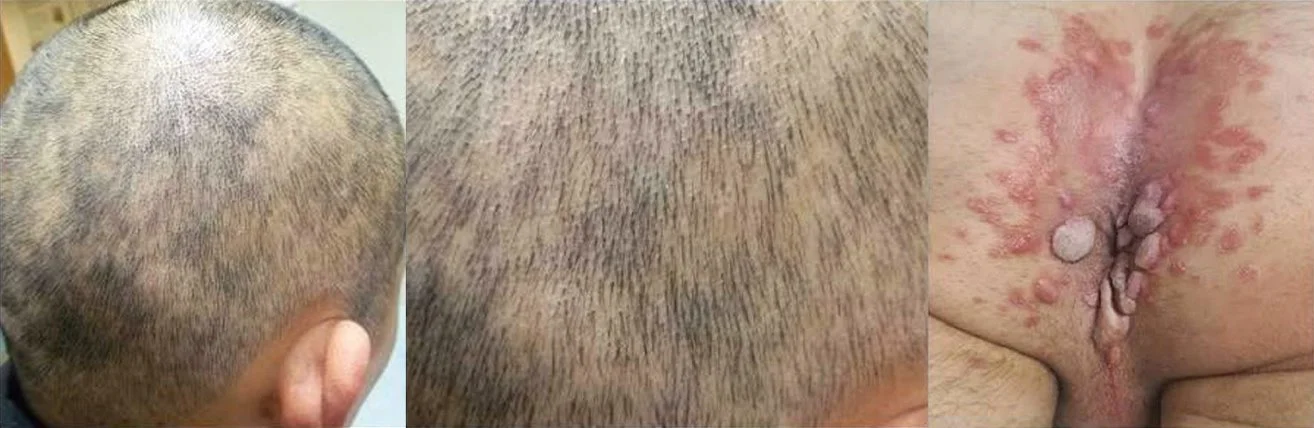
Other characteristic findings include moth-eaten alopecia and condyloma lata, which may appear in moist skin folds.
Latent Syphilis Infection Without Symptoms
When earlier symptoms disappear, syphilis may enter a latent stage. There are no obvious symptoms during this period, and the infection is usually detected through blood tests.
Common indications:
| Stage | Typical Timing | Main Features |
|---|---|---|
| Primary | ~3 weeks (10–90 days) | Painless chancre ± swollen lymph nodes |
| Secondary | Weeks–months later | Widespread rash, often palms & soles; mucosal lesions, hair loss |
| Latent | Variable | No symptoms; positive blood tests |
| Tertiary | Years later; uncommon | Cardiovascular disease, gummas |
Note: Not everyone develops typical symptoms, and neurological, eye, or ear involvement can occur at any stage.
Syphilis Is More Than a Skin Infection
Syphilis is a systemic infection that can affect the nervous system, eyes, ears, and cardiovascular system. Without treatment, it can lead to serious complications, sometimes years after the initial infection.
When Should Syphilis Be Considered?
Syphilis may be missed when symptoms are mild, atypical, or have already disappeared. Diagnosis therefore relies not only on clinical findings, but also on sexual history and blood testing when appropriate.
Timely screening helps protect your health and prevent further transmission.
References:
- DermNet
- European Centre for Disease Prevention and Control
-国家卫生健康委员会
