Asteatotic Eczema: When Dry Skin Becomes Inflamed
As temperatures drop, the skin may become tight, flaky and itchy. When dryness progresses to fine cracks, redness, oozing or stinging, it may be asteatotic eczema, also known as xerotic eczema.
Why does it happen
The outer skin layer acts like a brick wall. Natural lipids hold it together, lock in moisture and keep irritants out.
When these lipids decrease, the barrier weakens, causing moisture loss and inflammation.
Common triggers include:
Cold, dry weather or prolonged exposure to air conditioning
Hot or frequent showers
Harsh cleansers that strip away natural oils
Reduced sebum production with age
Typical signs
Dry, scaly skin with fine cracks in a craquelé pattern
Itching, tightness or stinging
Redness or oozing after scratching
Most commonly affecting the lower legs, arms and trunk
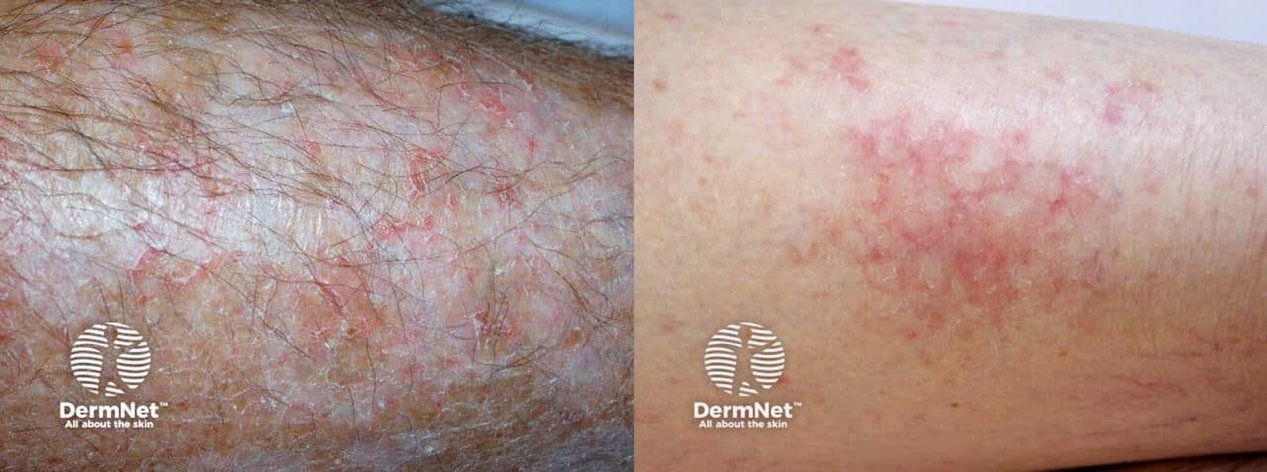
/ Image source: DermNet
Daily care and treatment
1. Adjust your daily routine
Eczema: a pattern, not a final answer Click here to find out more
Bathing tips for dry skin relief Click here to find out more
Keep showers short and use lukewarm water.
Choose a gentle, fragrance-free cleanser.
Gently pat the skin dry with a towel.
Apply moisturizer while the skin is still slightly damp.
Avoid harsh or fragranced skincare products.
2. Choose the right moisturizer
Helpful ingredients include:
Ceramides: replenish skin-barrier lipids
Glycerin: attracts and retains water
Urea: improves hydration and gently softens thick, flaky skin
Urea may sting on inflamed or cracked skin. In these areas, a plain fragrance-free cream or ointment may be more comfortable.
Lotions are lighter, while creams and ointments provide stronger protection for very dry skin.
3. Control inflammation
Red, itchy or oozing skin may require a prescription anti-inflammatory cream, such as a topical corticosteroid.
Asteatotic Eczema and Similar Conditions
| Type | Contributing factors | Typical appearance | Common areas |
|---|---|---|---|
| Asteatotic eczema | Reduced skin lipids and environmental dryness | Dryness, scaling and fine cracks | Lower legs, arms and trunk |
| Atopic dermatitis | Genetic predisposition; skin-barrier dysfunction; immune dysregulation | Recurrent redness and itching | Face in infants; neck and skin folds in older children and adults |
| Contact dermatitis | Irritants or allergens | Redness and itching at the site of exposure | Areas in direct contact with the trigger |
When to See a Doctor
Seek medical advice if:
The skin is oozing, crusting or showing signs of infection
Itching is affecting sleep or daily life
Regular moisturizing does not improve the symptoms
Cracks become painful or start bleeding
Consistent, gentle skincare helps replenish moisture and lipids, allowing the skin barrier to gradually regain a healthier and more stable state.
